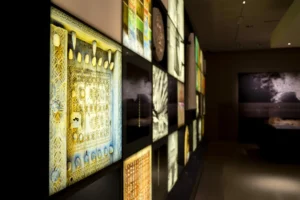
The Role of Large-Format Graphics in Museum Branding

Museums are more than places to discover objects and explore history. They are environments that tell stories, create connections and leave lasting impressions on visitors. From the moment someone enters a gallery, the visual identity of the space plays an important role in shaping their experience.
Large-format graphics offer museums an effective way to bring their brand to life. Through impactful imagery, colour, typography and carefully selected materials, graphics can transform interiors, communicate stories and create a consistent identity across different exhibition spaces.
At Leach, we design, manufacture and install bespoke large-format graphics and display solutions that help museums and visitor attractions create engaging environments, combining creative thinking with technical expertise.

Creating a distinctive museum identity
A strong museum brand goes beyond a logo or a set of brand colours. It is expressed throughout the visitor environment, from exhibition entrances and feature walls to interpretation panels and illuminated displays.
Large-format graphics help translate a museum’s identity into a physical experience. Bold imagery can establish an immediate sense of place, while consistent typography, colour palettes and graphic styles create continuity between galleries.
Printed wallpapers, tension fabric graphics, vinyl applications and bespoke display panels can all help introduce atmosphere, provide historical context and establish visual connections between different parts of a gallery.
The challenge is finding the right balance between creating visual impact and allowing the collections to remain at the centre of attention. Graphics should complement the exhibits, reinforce the narrative and help visitors connect with the stories being told.

Bringing exhibitions to life through large-format graphics
One of the biggest advantages of large-format print is its ability to transform a space. Walls, windows and structural elements can become part of the exhibition itself, creating an immersive environment that encourages visitors to engage with the content around them.
Lightboxes can draw attention to key information and imagery, while large-scale graphics introduce atmosphere and help establish a consistent visual identity. The choice of format depends on the exhibition’s objectives, the available space and the experience the museum wants to create.
Leach’s work on Power Up at the Science and Media Museum demonstrates this approach. The project combined large-format wallpaper, window graphics and raised acrylic lettering to create a bold, contemporary environment for the interactive gaming experience. The graphics worked alongside the exhibition’s digital installations to establish a cohesive visual identity.

Balancing visual impact with the character of the building
Museum environments often present unique design and installation challenges. Historic buildings, uneven walls, architectural features and conservation requirements can all influence how graphics are produced and installed.
Material selection is particularly important. The finish, texture, weight and fixing method of a graphic must be appropriate for the surrounding environment while still achieving the intended visual effect.
Aluminium panels can provide a clean, contemporary finish, while plywood introduces warmth and natural texture. Printed fabrics can soften a space, and large-format wallpaper can create a continuous visual surface across extensive wall areas.
Choosing the right materials and installation methods helps museums create a distinctive visual identity without compromising the character of the building or the practical requirements of the space.

Creating a consistent and accessible visitor experience
For museums with multiple galleries, temporary exhibitions or extensive collections, consistency is an important part of brand identity.
Visitors should be able to recognise a museum’s visual language as they move through different spaces, even when the subject matter changes. A consistent approach to typography, colour, finishes and graphic presentation helps create a connected experience while allowing individual exhibitions to retain their own character.
Graphics should also be easy to read, thoughtfully positioned and designed to support a wide range of visitors. Suitable colour contrast, clear typography and well-considered layouts can improve the accessibility of interpretive content and help visitors navigate the space.
Flexibility is another important consideration. Museums regularly update exhibitions and introduce new collections, so systems such as tension frames and replaceable graphic panels can make it easier to refresh visual content without replacing every component.

Bringing museum brands to life with Leach
Successful museum branding starts with an understanding of the space, its audience and the stories it needs to communicate. By considering graphics, materials and installation requirements early in the design process, museums can create environments that are visually engaging, practical and consistent with their wider identity.
At Leach, we combine large-format print, bespoke display solutions, project management and installation to help museums, galleries and visitor attractions turn creative concepts into physical environments.
From immersive wall graphics and bespoke lightboxes to tension frames, printed panels and specialist fabricated elements, we work with clients to find solutions tailored to each project.
Whether you’re planning a new exhibition, redeveloping an existing gallery or looking to strengthen your museum’s visual identity, large-format graphics can play an important role in connecting your brand with your visitors.
Planning a museum project? Get in touch with Leach to discuss how our large-format graphics and display solutions can help bring your vision to life.